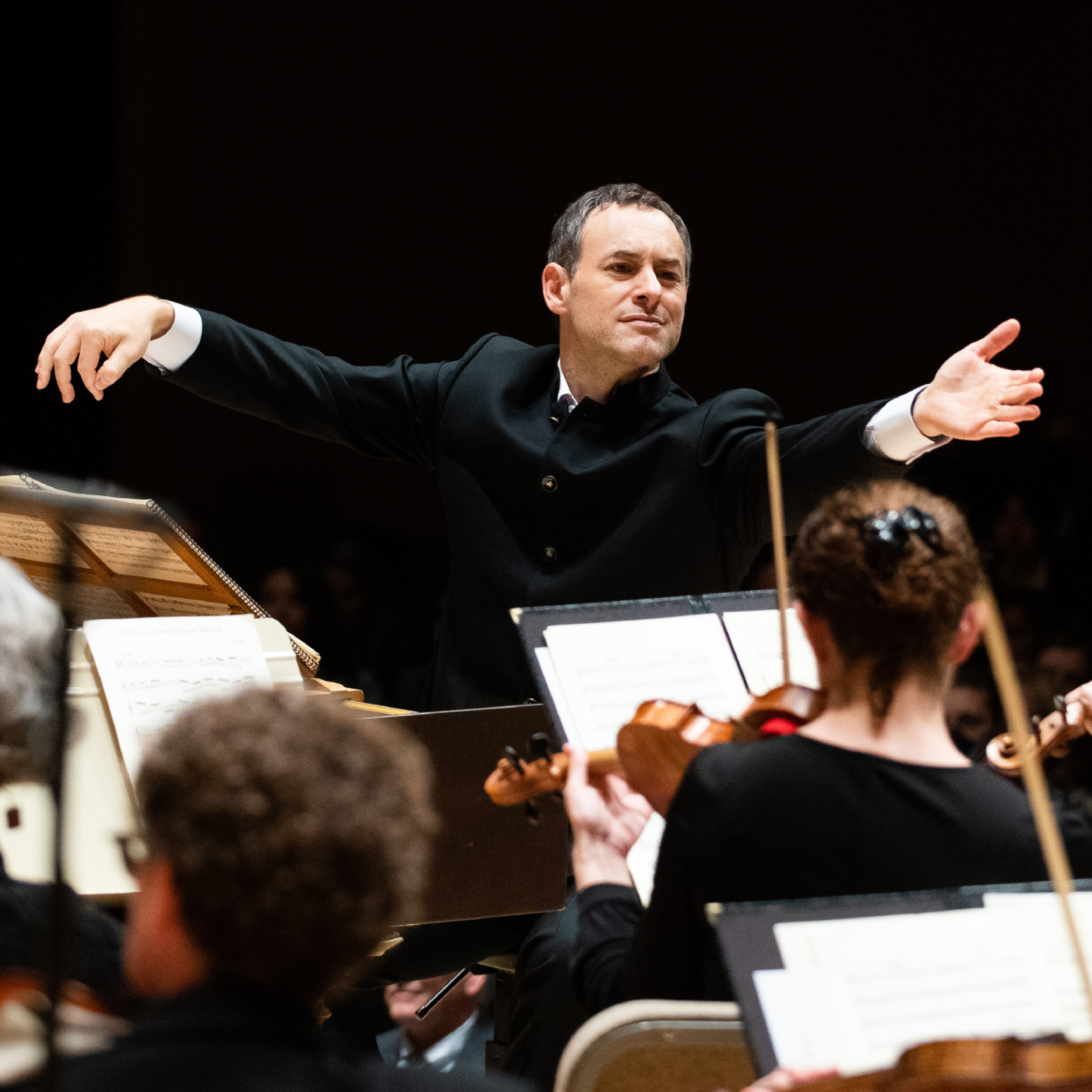
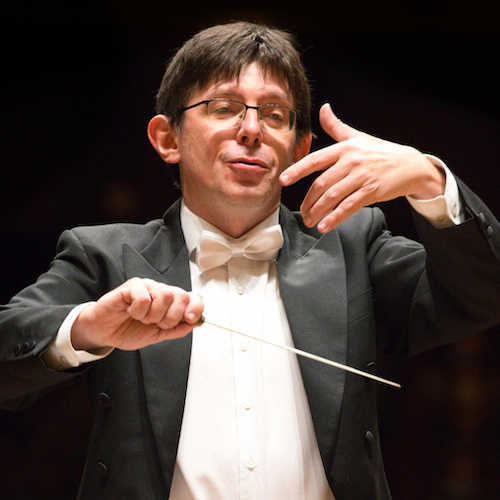
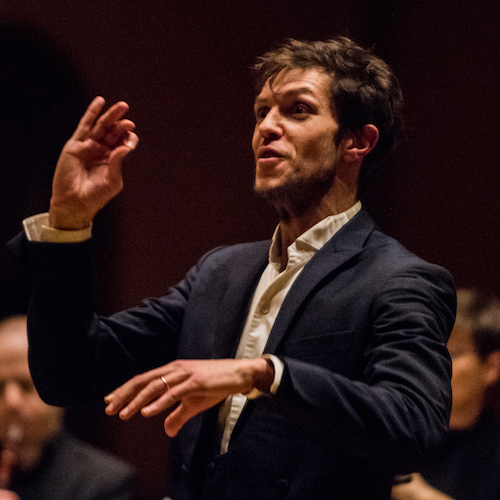
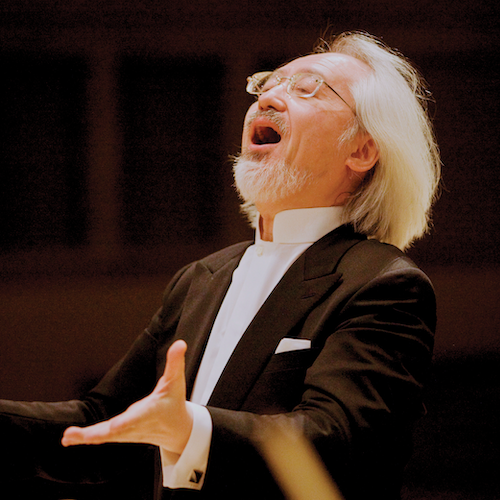
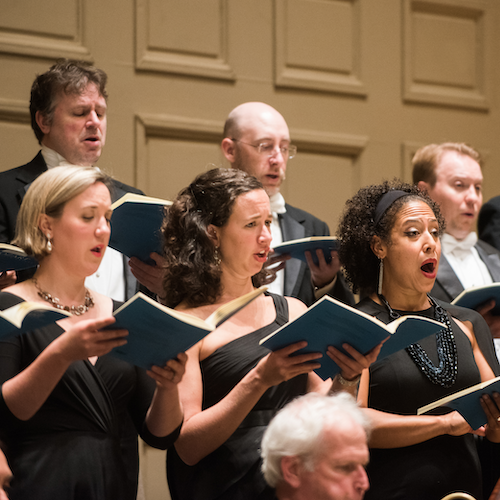
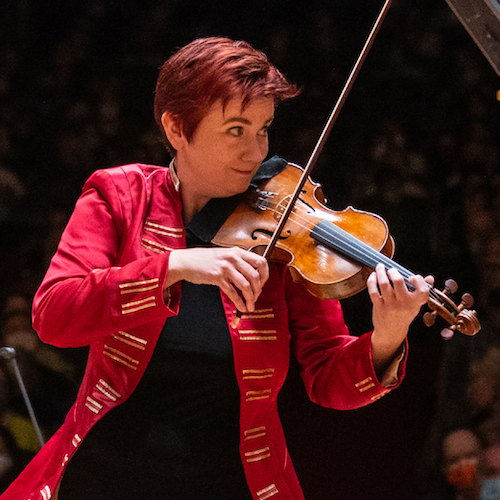
After conducting H&H in sold-out performances of Beethoven’s Fifth Symphony in 2011, Richard Egarr takes Symphony Hall by storm with Beethoven’s masterful Symphony No. 7. H&H principal clarinet Eric Hoeprich, renowned as one of the finest period clarinetists in the world, brings Mozart’s playful clarinet concerto to life. Egarr and Hoeprich will take your breath away with their virtuosic and powerful interpretations of these great compositions.
Program
- Mozart: Masonic Funeral Music
- Mozart: Clarinet Concerto
- Beethoven: Symphony No. 7
Related Events
Collaborative Youth Concerts
Students from February 2013's Collaborative Youth Concerts will perform excerpts from Handel's Utrecht Te Deum from the stage at Symphony Hall.
Pre-Concert Conversations
One hour before the start of each performance in Symphony Hall's Higginson Hall.
H2 Young Professionals
Join our H2 group for an afterparty at Lucca Back Bay following the March 15 concert.
News and Reviews
“The performance was a minor revelation.”
Concerto hits right notes
The Boston Globe, March 16, 2013
“The program was framed by triumphs.”
Conquest, Clarinets and Chorus at H&H
Boston Musical Intelligencer, March 16, 2013
“The orchestra accompaniment, under Egarr’s hand, swelled to obtain intimate warmth.”
Egarr leads H&H in mostly successful Beethoven and Mozart
Boston Classical Review, March 16, 2013
Program Notes
When Ludwig van Beethoven (1770–1827) was a young performer, his father lied about his age. By portraying his son as two years younger than he actually was, Beethoven’s father was marketing Ludwig as a “new Mozart.” This association would have solidified with Beethoven’s first trip to Vienna, when he was expected to study with Mozart. These lessons did not materialize and, before Beethoven was ready to return, Mozart died. While Beethoven prepared for his second trip to Vienna, this time for studies with Haydn, his patron wrote that he would “receive Mozart’s spirit through Haydn’s hands.” With the music on today’s concert, we can hear the common musical language and extraordinary musical spirit of both composers.
(Johann Chrysostom) Wolfgang Amadé Mozart was born in Salzburg on January 27, 1756. At the age of six, Wolfgang, and often his sister Maria Anna, began performing for enthusiastic audiences in Vienna and Munich. Over the next eight years, he traveled to European capitals, astonishing professional musicians and amateurs alike with his musical abilities and knowledge.
Having been given the honorary title of Konzertmeister (concertmaster) for the court orchestra of the Archbishop of Salzburg, on October 27, 1769, Mozart was officially appointed to the post on July 9, 1772, with a modest salary of 150 florins. Five years later, Mozart, with help from his father, asked to be released from these responsibilities. The archbishop responded by firing both father and son. His father’s position was soon restored, but Wolfgang, who was not reinstated, was free to offer his talents to other courts and traveled with his mother in search of a better post. No position was offered and the trip ended tragically when his mother died while they were in Paris in 1778. Soon after, Leopold instructed his son to return to Salzburg; there was a new position as court organist available in addition to his post as concertmaster. Mozart reluctantly accepted the new position.
After traveling to Munich in 1780, to fulfill an opera commission, Mozart left the archbishop’s court in June 1781, and moved to Vienna, where on July 31, 1782, he married Constanze Weber. His first years in Vienna were filled with success. He composed one of his most popular operas, The Abduction from the Seraglio, and was in demand as a performer and composer.
On December 14, 1784, Mozart was inducted as an Apprentice in the Zur Wohltätigkeit (Beneficence) Masonic Lodge. On January 7, 1785, he was made a Journeyman and soon became a Master Mason. Mozart often offered his musical talents for lodge functions and composed a great deal of Masonic music. His Masonic Funeral Music, K. 477/479a, dates from no later than November 1785; it was probably composed for a memorial service for two lodge brothers, Duke Georg August von Mecklenburg and Count Franz Esterházy von Galántha. This orchestral music features strikingly beautiful writing for a full complement of wind instruments and a poignant descending motive (sighing motive); the low and high instruments alternate in a kind of musical conversation.
The year 1786 was a busy one for Mozart. He was well known in Vienna as a composer and pianist, and his opera Le nozze de Figaro (The Marriage of Figaro) was one of three productions staged that year. In addition, his music was being published and he was teaching. He frequently went to a weekly salon of music, games, and conversation, hosted by one of his students. Mozart looked forward to these evenings and wrote many works for them. Another friend and fellow Mason, the clarinetist Anton Stadler (1753–1812), also attended. Stadler and his brother Johann were members of the court of Count Dmitry Gallitzin and, from 1779, the imperial court. Stadler specialized in the lower range of the clarinet, leading to experiments in extending the range of the instrument by four half-steps. Mozart composed the Clarinet Concerto (and the Clarinet Quintet) for this new instrument, the basset clarinet.
Stadler’s playing was likened to the voice and was reported to be soft and gentle. These qualities can also describe Mozart’s Clarinet Concerto in A Major, K. 622. The first movement alternates between orchestral and solo sections, using just one theme. When the listener might expect a new thematic idea, Mozart returns to the first theme, but treats it as a canon (round). As the movement continues, the solo clarinet becomes more prominent, leaping between very low and high notes. The second movement is lush and song-like, giving full voice to the warmest tones of the clarinet, while the final movement is light and jovial, giving the soloist ample opportunity to demonstrate mastery of the instrument.
Mozart returned to traveling in 1789, when he accompanied Prince Karl Lichnowsky on a trip to Berlin. At a stop in Leipzig, Mozart played the organ at the Thomaskirche, where Johann Sebastian Bach had been music director. The last years of Mozart’s life were busy with composing new works, including the Clarinet Concerto, symphonies, two operas, and a Requiem. He died on December 5, 1791.
Born into a family of Bonn court musicians, by the age of 11, Ludwig van Beethoven’s “youthful genius” was often compared with Mozart and, in 1787, Beethoven traveled to Vienna to study with him. Beethoven did not return to that city until 1792, when studies with Joseph Haydn (1732–1809) were arranged. After moving to Vienna, Beethoven remained a freelance artist who received financial support from the aristocracy, but never held a position as court Kapellmeister. He also earned money through teaching, publishing, and performing.
In 1802, after a series of unsuccessful treatments designed to cure or at least slow his hearing loss, Beethoven went to the village of Heiligenstadt to rest. There he wrote an impassioned and moving letter that, in part, describes his personal struggles and his desire to continue with his art: “Ah, it seemed to me impossible to leave the world until I had brought forth all that I felt was within me.” The next 25 years of compositions are a testament to this statement, as Beethoven takes the musical language of the late 18th century and transforms it into his own unmistakable style. Beethoven’s major compositions include nine symphonies, one opera, and five piano concertos.
Symphony No. 7 in A Major, Op. 92 was composed in April 1812. It premiered, along with Symphony No. 8, on December 8, 1813. Because of the triumphant character of the Seventh Symphony and the fact that another “victory” symphony, Wellington’s Victory, was played at the same concert, Viennese audiences thought of the Seventh Symphony as a composition about the defeat of Napoleon. The symphony was very successful and frequently programmed in concerts. Later commentators likened the symphony, or specific movements, to weddings and festivals, and Richard Wagner described it as the “apotheosis of the dance.”
The slow introduction to the first movement begins with the full orchestra punctuating a chord from which emerges a single woodwind. With each exclamation by the full orchestra, a new wind instrument is heard; the strings then take over with continually rising figures. When the winds return, they introduce a rhythmic idea that is explored throughout the remainder of the introduction and related to the first theme of the movement, introduced by the flute, which has not yet been heard. When the whole orchestra takes up this idea, there is an unmistakable exuberance.
The second movement, Allegretto, became something of a popular sensation with arrangements made for various combinations of instruments, including one for two pianos created by Beethoven’s pupil Carl Czerny. Beethoven approved of this arrangement, which helped bring orchestral repertoire into the home. This movement is also introduced by the winds, making a short burst similar to that heard played by the whole orchestra at the start of the symphony. The unrelenting rhythm of the first section is relieved by a central section, but returns in a new guise later in the movement.
A new kind of rhythmic momentum characterizes the third movement, Presto. Beethoven shifts the emphasis slightly, resulting in a new sense of lively exchanges between sections of the orchestra. The Trio section features the winds, often while the strings hold a steady pitch (drone). Beethoven breaks with formal conventions (Scherzo – Trio –
Scherzo) in this movement by returning to each section one extra time.
Like previous movements, the fourth, Allegro con brio, opens with an exclamation by the full orchestra that quickly shifts to an unrelenting dance of pure energy. These rhythmic patterns are related to those of the previous movements, but, also like the earlier movements, sound fresh and new. They are different, yet familiar.
Although Beethoven’s personal contact with Mozart was, at best, brief, the younger composer knew his predecessor’s compositions well. From Mozart, Beethoven learned how to create drama in an instrumental composition and how to temper that drama, as well. Taking these ideas to heart, Beethoven fulfilled the prediction from his youth, “to go to Vienna and receive the spirit of Mozart.”
© Teresa M. Neff, PhD, 2013
2012–2013 Historically Informed Performance Fellow
Artists, dates, and programming are subject to change.
At-A-Glance
Mar 15, 2013 at 8pm
Mar 17, 2013 at 3pm
Listen
Beethoven: Symphony No. 7
(The London Classical
Players; Sir Roger Norrington, conductor)
Plan Your Visit
Get directions to the concert hall
Order a three-course prix-fixe dinner from Lucca Back Bay for H&H patrons
Consult our Frequently Asked Questions