Mozart Jupiter

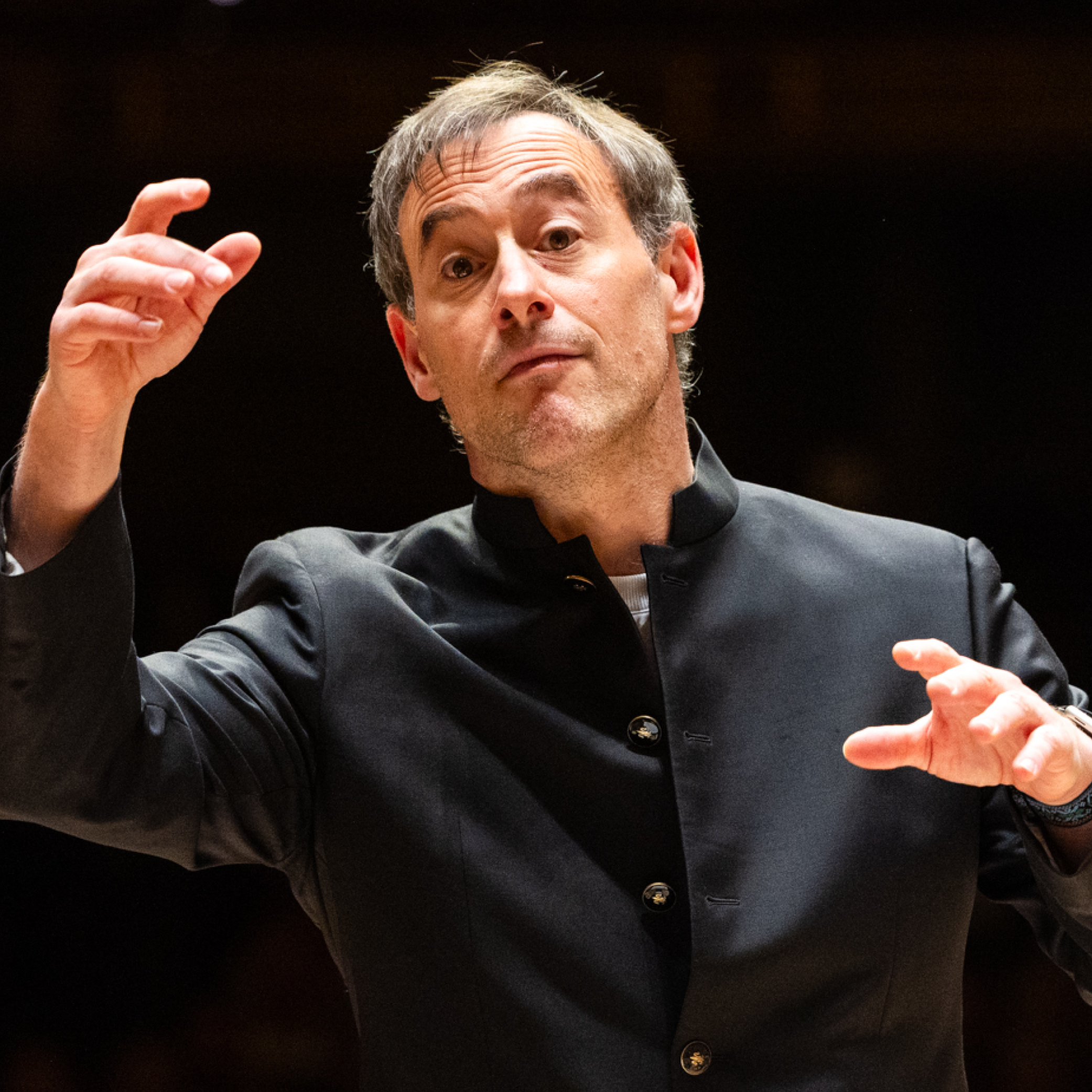
Bernard Labadie returns to the Handel and Haydn Society to conduct Mozart’s towering Symphony No. 41, Jupiter—the composer’s final symphony. Considered one of the greatest works of the 18th century, Jupiter foreshadows the work of Beethoven.

Program

  • Rigel: Symphony in C Major
  • Kraus: Symphony in E Major
  • Haydn: Symphony No. 26, Lamentatione
  • Mozart: Symphony No. 41, Jupiter

Related Events

Pre-Concert Conversations
One hour before the start of each performance in Symphony Hall's Higginson Hall.

H2 Young Professionals
Join our H2 group for an afterparty at Lucca Back Bay following the November 9 concert.

News and Reviews

“The Mozart performance was terrific and unusually nuanced.”

Handel & Haydn Society separate summits from foothills of 18th-century symphonies
The Boston Globe, November 10, 2012


“An enlightening evening of music.”

Labadie, Handel and Haydn offer a Mozart masterpiece and three Classical-era rarities
Boston Classical Review, November 10, 2012


“Friday night’s intelligent, sensitive performance emphasized the side of Mozart as a brilliant, young spirit.”

This New Thing Called “The Symphony”
The Boston Musical Intelligencer, November 10, 2012


“A performance that was filled with life and radiated light.”

Fuse Concert Review: Handel and Haydn Society/Bernard Labadie at Symphony Hall
ArtsFuse, November 12, 2012


“The kind of performance that makes the hair on the back of your neck stand on end.”

Labadie reaches Jupiter with Handel and Haydn
The Hub Review, November 17, 2012

Program Notes

Symphonic Treasures

On one hand, the symphonies presented in this concert outline the development of the genre in the second half of the 18th century. (From this perspective, we might be tempted to construct a symphonic hierarchy, something of a precarious notion.) More to the point, each symphony is a gem, a unique work that conveys powerful musical affects within the discipline of instrumental composition.

Henri-Joseph Rigel [Riegel] (1741–1799), born in Wertheim, Germany, was an important musician in Paris in the second half of the 18th century. After studying with the composer Niccolò Jommelli (1714–1774), Rigel moved to Paris in 1768. Rigel wrote in all genres. His music was successful in publication as well as performance, being programmed into the 19th century. He was known for his operas as much as his instrumental music; he composed 14 operas in about 11 years. He was named a compositeurs (composer) of the Paris Concert spirituel in 1783, and his music was performed 53 times over 14 seasons. Also in 1783, he became maître de solfège (master of sight-singing) for the École royale de chant. When this institution reopened as the Conservatoire after the French Revolution, Rigel joined the piano faculty; he held this position until his death in 1799.

Rigel’s Symphony in C Minor, Op. 12, No. 4, composed in 1769, is in three movements and scored for strings plus winds. The outer movements are spirited and dramatic, with pulsing bass lines that support bold melodic lines in the winds and violins. The central movement is an emotional counterpoint to these, with lyrical melodic lines shared between the upper strings and oboes.

Another composer who spent the majority of his career outside his homeland was Joseph Martin Kraus (1756–1792). Because of his musical talent, particularly in voice and violin, he went to a Jesuit school in Mannheim, where he had the opportunity to study with members of that area’s famous orchestra. He went to university, first in Mainz and then in Erfurt, to study philosophy and law. In Erfurt, he also continued his musical training, studying counterpoint with Johann C. Kittel, a student of Johann Sebastian Bach.

In 1776, Kraus returned home when his father, a local government official, was indicted for abusing the authority of his position. Later that same year, Kraus resumed his studies at Göttingen University, where he came into contact with the literary movement known as Sturm und Drang (Storm and Stress). In 1777, he wrote a treatise that applied these literary ideals to music. The following year, a friend convinced Kraus to accompany him to Stockholm, Sweden.

Although his first years in Stockholm were difficult, in 1780 Kraus was elected to the Royal Academy of Music; the following year he composed a very successful opera for the court. He was then appointed assistant director of the orchestra and permitted to travel throughout Europe for the purpose of studying the latest musical tastes. Through this court-subsidized tour, Kraus met the leading composers of the day, including Joseph Haydn. He also attended the 1785 Handel Centennial Festival in London.

Upon his return to Stockholm, Kraus soon became Kapellmeister of the court. He taught at the Royal Academy, composed, and conducted both at the opera and at court. He also renewed his interest in the relationship between all the arts; he wrote poetry, treatises, and librettos in addition to maintaining a large correspondence with family and friends.

Kraus’ Symphony in E Minor combines clearly articulated musical phrases and sections with nuanced connections between ideas, resulting in a cohesive composition. This phrasing is heard in the first movement, of which the second half expounds on ideas heard in the beginning. The second movement offsets rhythmic flexibility in the violins and oboes against a firm bassline. The final movement is a rolling conclusion with a few delightful surprises that today’s audience might associate with Haydn.

Born on March 31, 1732, Joseph Haydn (1732–1809) was the son of a wheelwright. When he was about eight years old, he became a choirboy at St. Stephen’s Cathedral in Vienna, where he remained for about 10 years. After leaving St. Stephen’s, Haydn had to “eke out a wretched existence” by teaching, playing organ and violin for church services, and performing in instrumental ensembles. Haydn studied composition on his own and eventually with Nicola Porpora, a composer and singing teacher for whom Haydn was an accompanist.

In 1761, Haydn was appointed Vice-Kapellmeister to the Esterházy court; he was promoted to Kapellmeister in 1766. When the family patriarch, Nikolaus, died in 1790, his successor disbanded the court orchestra. Although Haydn was still employed by the new prince, he was now able to pursue other opportunities as well. About this same time, Haydn was approached by the violinist and entrepreneur Johann Peter Salomon about going to England. Haydn accepted the offer and composed many works, including six symphonies, for the tour. He returned to Vienna a celebrity and with plans for a second tour. After returning to Vienna from the second trip to England in 1794–1795, Haydn composed masses and the oratorios, The Creation and The Seasons.

Like the symphonies by Rigel and Kraus, Haydn’s Symphony No. 26 in D Minor has three movements. The symphony was composed before 1770, probably in 1768 or 1769. Although it is uncertain who nicknamed it Lamentatione, the title is related to Haydn’s use of a chant melody sung at Easter in Austria during this time. This theme follows and contrasts with the opening idea in the first movement.

Haydn also uses the chant melody in the second movement, Adagio, which is soothing and lush with long melodic lines that never feel stagnant due to the string figuration. The third and final movement is something of a surprise: a minuet and trio. As with the other two movements, the winds sustain longer lines, paired with a staccato, or separated, articulation in the strings. The arrival of the trio brings interruptions and outbursts, a dramatic turn in the musical story.

Wolfgang Amadé Mozart’s (1756–1791) life can be seen in three segments: his youth as child prodigy; the 1770s, when his reputation as a composer equaled his reputation as a performer; and the 1780s, as a mature composer in Vienna. Even when Wolfgang was a young child, his father Leopold recognized his son’s unique talent and arranged for Wolfgang, and often his sister Anna Maria, to perform throughout Europe. No doubt a source of income for the family, these tours gave the young musician invaluable first-hand experience with diverse compositional styles.

In the 1770s, with the mystique of the child prodigy waning, Mozart turned to composition in earnest with the hope of securing a leading musical position at a European court. He never received the court appointment he sought (Kapellmeister), but as a freelance musician in Vienna in the 1780s, he wrote on commission, taught, performed, and published.

In 1788, Mozart’s income from publishing decreased substantially (about 75% from the previous year). His two sources of steady income were his imperial post, for which he wrote mostly dance music; and arranging and conducting performances of Handel oratorios for the Gesellschaft der Associierten Cavaliere, a group of noblemen in Vienna. During the summer, he completed three symphonies, the last of which, Symphony No. 41 in C Major, was entered in his personal catalog on August 10, 1788. Mozart had not composed a symphony since 1786, and the reason he now wrote three in quick succession is uncertain. They may have been composed for an upcoming concert series or an anticipated, but unfulfilled, trip to London.

In the first movement, Allegro vivace, Mozart places three ideas back-to-back: an assertive, ascending motive played forte (loudly) and in unison; rests (silence); and a lyrical, ascending melody plus accompaniment played piano (softly). Each of these elements will be manipulated throughout this movement and the symphony as a whole.

The second movement, Andante cantabile (slow and songlike), features muted strings. The opening echoes the first movement with short motives separated by rests. Mozart continues relating the movements with the Minuet and Trio, which floats in an elegant dance until dramatic interruptions displace the natural flow.

The last movement returns to the energy and power of the first, then Mozart refocuses our attention as this movement supposedly comes to a close. Mozart does so in the coda, traditionally used to signal the conclusion of the work, by incorporating five different themes in an astounding contrapuntal section, a fugue. All of this adds up to a symphony of tremendous power and beauty.

© Teresa M. Neff, PhD, 2012
2012–2013 Historically Informed Performance Fellow

Artists, dates, and programming are subject to change.

At-A-Glance

Nov 9, 2012 at 8pm
Nov 11, 2012 at 3pm
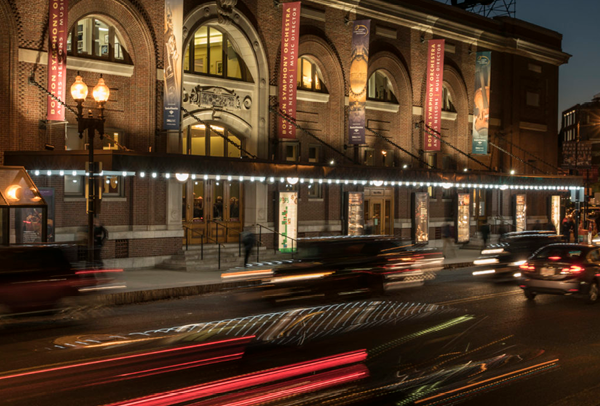
Symphony Hall

Listen

Mozart: Symphony No. 41, Jupiter
(Apollo's Fire; Jeannette Sorrell, conductor)

Program Book

Plan Your Visit

Get directions to the concert hall

Order a three-course prix-fixe dinner from Lucca Back Bay for H&H patrons

Consult our Frequently Asked Questions

Share This